Aircon Maintenance in Davao's Humid Season: A Homeowner's Guide
New Leaf Home Assist Team · New Leaf Home Assist
September 10, 2026 · 3 min read
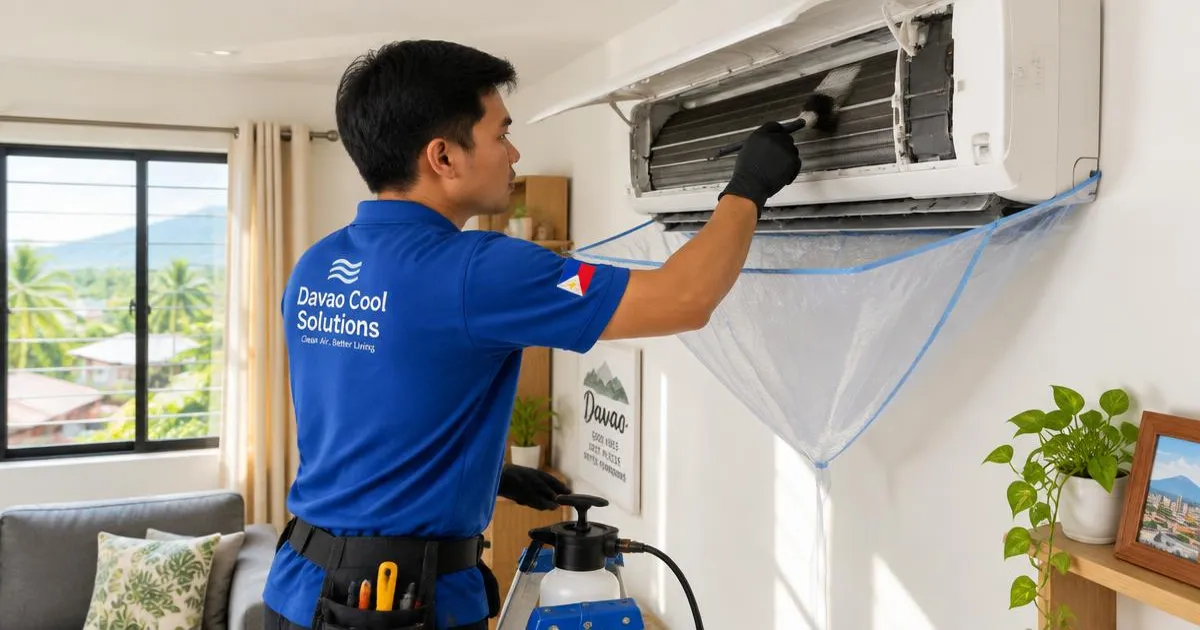
Aircon maintenance in Davao starts with understanding what your unit can safely receive at home and what needs a technician. Reduced cooling, water dripping indoors and musty odors are different symptoms, not automatic proof that the unit needs more refrigerant. A modest inspection and a record of changes can help you request the right service without opening electrical panels or attempting a deep clean yourself.
Check the filter according to your unit's instructions
A dirty filter can restrict airflow and make comfortable cooling harder to achieve. Consult the owner's manual for how to remove it, whether it is washable and when it should be checked. Dust, pets, frequent use and the room environment can affect how quickly it becomes dirty, so do not treat one universal schedule as suitable for every household.
Switch the unit off and follow the manufacturer's power-isolation instructions before accessing user-serviceable parts. Only remove the filter or cover that the manual permits. Wash a reusable filter as directed, let it dry fully and reinstall it properly. A disposable filter needs the appropriate replacement, not washing. Never run the unit without its required filter.
Keep airflow clear inside and outside
Check that curtains, furniture and stored items are not blocking the indoor unit. Keep the outdoor unit's surrounding space clear from a safe accessible position, allowing the clearance specified by the manufacturer. Do not climb to a high-mounted unit, bend fins, reach into a fan or remove protective guards.
Clean only accessible external surfaces in the way the manual recommends. Spraying water into a powered unit or using a pressure washer can damage equipment and expose you to electrical hazards. If the outdoor unit is on a roof, narrow ledge or difficult balcony position, leave access and cleaning to a trained professional.
Distinguish weak cooling from a refrigerant problem
Before arranging a visit, check the mode, temperature setting, closed doors and windows, and whether the filter is visibly dirty. Note whether airflow is weak or whether strong airflow simply feels less cool than usual. Also note when the symptom appears, such as soon after switching on or only after extended operation.
A technician may need to assess airflow, coils, controls, drainage and the refrigerant circuit. Refrigerant is not a routine household top-up. If there is a leak, adding more without repairing and testing the system does not address the cause. Do not attempt to charge the system or handle refrigerant yourself.
Treat indoor dripping as a reason to investigate
Condensation belongs in the unit's drainage arrangement, not on walls, furniture or nearby sockets. A blocked drain, installation issue or another fault may cause indoor dripping, but observation alone cannot confirm which one. Switch the unit off if water is reaching electrical equipment, and keep the area clear.
Do not open a wet outlet or electrical panel, and do not assume an aircon leak is harmless because the water looks clean. Our electrical warning signs article explains hazards that need a separate electrical assessment. For damp areas unrelated to the unit, the plumbing leak guide can help distinguish what to report.
Know which symptoms belong with a professional
Stop using the unit and arrange assessment if there is a burning smell, smoke, repeated breaker trips, unusual loud mechanical noise or water near electrics. Do not reset a breaker repeatedly to keep cooling. Musty odors and visible contamination also warrant appropriate inspection, particularly if household members have respiratory concerns.
A short record makes the service request more useful:
- Unit make, model and approximate installation age if known.
- The cooling, noise, odor or dripping symptom and when it started.
- Filter maintenance and previous service details.
- Safe photos plus access restrictions for indoor and outdoor units.
Ask what cleaning and inspection are included, how additional repairs are approved and whether the technician will check drainage after service. Avoid assuming that every advertised cleaning package includes fault diagnosis.
Build maintenance around the household and the equipment
Keep service notes and follow the manual's maintenance guidance. Recheck accessible filters and airflow paths as part of your household routine, and act on recurring symptoms rather than masking them with lower temperature settings. Useful maintenance improves condition and visibility; it cannot guarantee a particular electricity saving or prevent every failure.
See our home service categories for the platform's service overview, or contact New Leaf to ask about aircon provider availability. The New Leaf Home Assist homepage explains the wider platform. When a fault involves wiring rather than ordinary cleaning, review the Davao electrician service page as well.
Frequently asked questions
- How often should I clean my aircon filter in Davao?
- For most homes in Davao, filters should be cleaned every 2–4 weeks, especially during periods of heavy use. Homes near busy roads or construction areas may require more frequent cleaning.
- Why is my air conditioner leaking water?
- Water leaks are commonly caused by clogged drain lines, dirty evaporator coils, damaged drain pans, or improper installation. If cleaning the filters does not solve the issue, it's best to contact a technician.
- How often should I have my air conditioner professionally cleaned?
- For units used daily, professional cleaning is generally recommended every 4–6 months. However, households with pets, smokers, or high dust exposure may benefit from more frequent servicing.
- Why does my aircon smell musty?
- A musty odor often indicates mold, mildew, or bacteria growth inside the unit due to moisture buildup. Professional cleaning can usually eliminate the problem and improve indoor air quality.
- Does cleaning my aircon reduce electricity costs?
- Yes. Clean filters and coils improve airflow and cooling efficiency, allowing the unit to use less energy. A well-maintained air conditioner can help reduce electricity consumption compared to a neglected unit.
- What temperature should I set my air conditioner to?
- Most homeowners find a setting between 24°C and 26°C comfortable while maintaining good energy efficiency. Lower temperatures force the unit to work harder and may increase electricity costs.
- Is chemical cleaning necessary?
- Chemical cleaning is recommended when dirt and contaminants have accumulated deep within the unit, airflow has noticeably decreased, or the system has not been professionally serviced for several months. It provides a more thorough cleaning than routine filter maintenance.
- Can I clean my air conditioner myself?
- Homeowners can safely clean filters and wipe external surfaces. However, internal components such as coils, blowers, refrigerant lines, and electrical parts should be handled by trained professionals to avoid damage or safety risks.
- How do I know if my air conditioner needs repair instead of cleaning?
- If your unit is making unusual noises, blowing warm air, tripping breakers, leaking refrigerant, or failing to cool properly even after cleaning, it may require professional diagnosis and repair rather than routine maintenance.
- What is the average lifespan of an air conditioner?
- With proper maintenance and regular servicing, a residential air conditioner can typically last 10 to 15 years, depending on usage, environmental conditions, and equipment quality.
Need help with this right now?
Describe the problem in the New Leaf app and get matched with a verified provider near you in Davao City.