Termite Warning Signs Every Davao Homeowner Should Know
New Leaf Home Assist Team · New Leaf Home Assist
September 21, 2026 · 3 min read
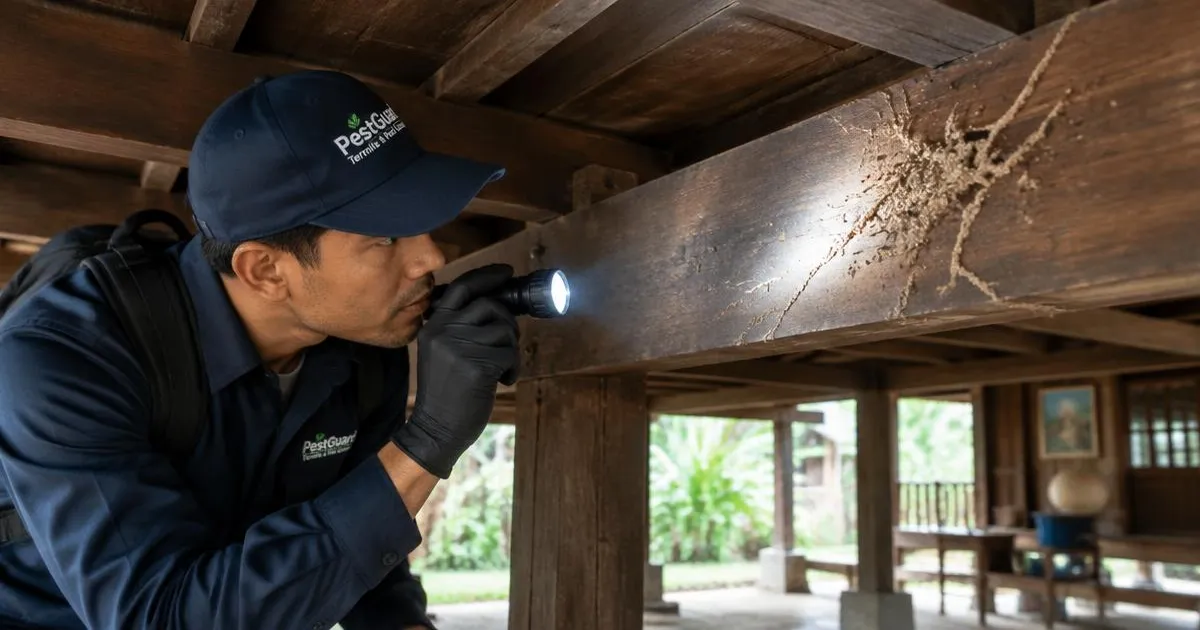
Termite damage can develop out of sight, so the first sign may be a small change around a door frame rather than an obvious swarm. If you are concerned about termites in a Davao home, look for patterns, document what you find and arrange a proper inspection. A hollow sound or a pile of wings alone does not confirm an infestation, but ignoring several warning signs can allow damage to progress.
Recognize mud tubes and discarded wings
Some termites build narrow mud tubes along foundations, walls or other surfaces to travel between their colony and a food source. You may notice them near ground level, around pipe entries or in sheltered corners. Photograph a suspected tube before disturbing it. Its location and appearance can help an inspector decide where to investigate.
Discarded wings near windows or lights can suggest that winged insects have entered or emerged nearby. Termites and flying ants are different, and identification matters. Termites generally have a less pinched waist and similarly sized wings, while flying ants have a narrow waist and unequal wing pairs. Take a clear photograph or preserve a sample safely if you can; let a pest professional confirm the species rather than choosing a treatment from a quick visual guess.
Notice changes in wood without damaging it
Watch for blistered surfaces, crumbling edges, unexplained grooves or wood that appears intact but sounds hollow. Doors and windows that suddenly stick may also deserve attention. However, moisture swelling, settlement and wear can produce similar symptoms. A new sticking door is a reason to investigate, not proof of termites.
Do not cut into structural timber or repeatedly poke weakened material to test its strength. Keep people away from visibly damaged stairs, flooring or supports and ask whether a separate structural assessment is needed. Pest treatment stops or controls activity; it does not automatically restore the strength of damaged wood.
Look for moisture and concealed access points
Leaks and persistent dampness can make a home more attractive to some termite species. Check accessible areas near bathrooms, kitchen plumbing and roof leaks without removing panels or entering unsafe spaces. Timber stored against walls, wood in contact with soil and clutter that hides the foundation can also make inspection more difficult.
Address the moisture problem as well as the pest concern. A recurring damp patch may need the checks in our plumbing leak guide, while an overhead stain belongs in the roof leak prevention guide. Fixing a leak helps maintenance, but it does not prove that an existing colony has been eliminated.
Prepare for an inspection rather than guessing at treatment
Before an appointment, note where you saw activity and when it first appeared. Make accessible areas visible without moving unsafe structures. Useful information includes:
- Photos of suspected tubes, insects, wings and damaged wood.
- Previous termite treatment dates and any available reports.
- Known plumbing or roof leaks near the affected area.
- Whether the home has children, pets or occupants with relevant health concerns.
Ask the inspector how the pest was identified, where activity was found and which treatment options are appropriate for your building. Request a written scope covering preparation, re-entry advice, follow-up visits and exclusions. A lower headline price is not enough to compare two plans that treat different areas.
Avoid improvised chemical treatments
Do not pour fuel, household cleaners or unlabeled mixtures into wood, soil or wall cavities. These can expose people and pets to hazards without reaching the colony. Professional termite products require correct identification, application and label compliance. Random spraying may hide visible activity while leaving the underlying problem unresolved.
For any proposed treatment, ask about the product, occupant precautions and who will apply it. Follow label and professional instructions, and do not assume a pesticide is harmless because its smell is mild. If exposure occurs, seek appropriate medical or poison advice rather than waiting for a maintenance appointment.
Keep inspection and repairs connected
After treatment, retain the report and follow the agreed monitoring schedule. Record new signs, keep suitable access areas clear and repair moisture sources. Ask a qualified repair professional to assess damaged timber where necessary. Our services page is a starting point for home maintenance needs; contact our team to ask about relevant provider categories and availability rather than assuming a specialist is immediately available.
Learn more about the platform on the New Leaf Home Assist homepage. The best next step is a confirmed diagnosis and a documented plan, not a trial-and-error chemical fix.
Frequently asked questions
- Should I spray termites myself?
- No. Spraying scatters the colony. Book a professional inspection and treatment.
Need help with this right now?
Describe the problem in the New Leaf app and get matched with a verified provider near you in Davao City.