Towing Service in Davao: What to Expect and How to Prepare
New Leaf Home Assist Team · New Leaf Home Assist
September 18, 2026 · 4 min read
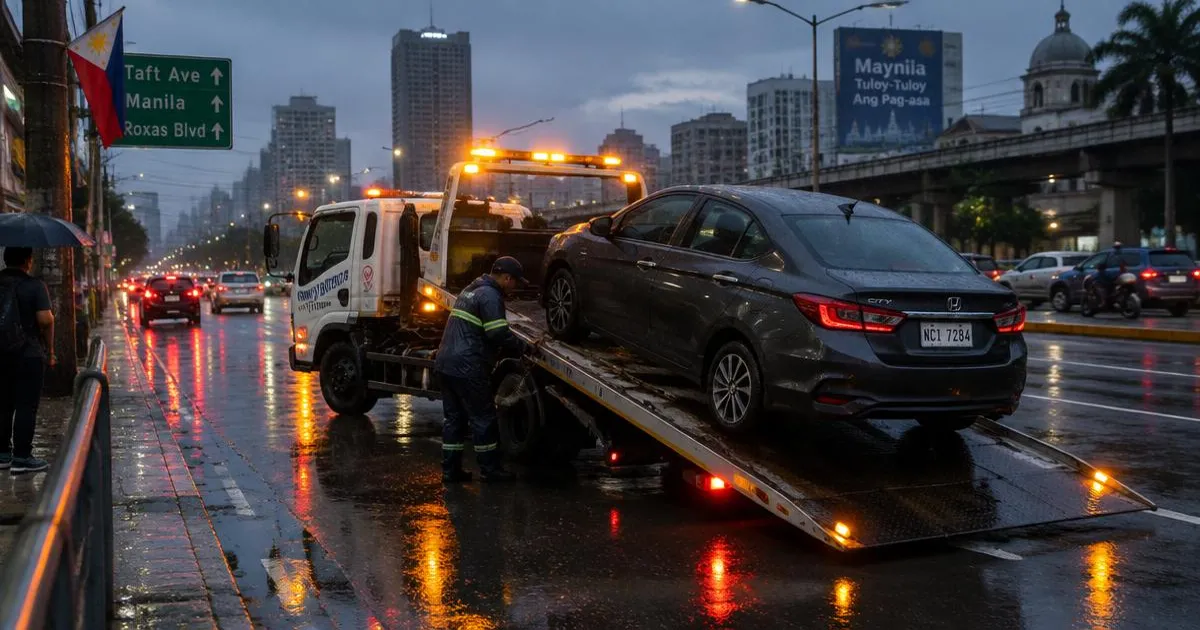
When a car cannot safely continue, arranging a towing service in Davao involves more than giving an address. The operator needs to know the vehicle type, the fault, its position and the intended destination. A clear request helps them choose suitable equipment and explain the work before loading begins. Start with roadside safety, then prepare the details needed for a controlled recovery.
Put people ahead of the vehicle
If the vehicle can move safely, pull away from traffic to a suitable stopping place and use hazard lights. Do not continue driving with severe overheating, serious steering or braking problems, or visible damage that makes the car unsafe. If you are already stopped in a dangerous position, do not try to push the vehicle through moving traffic.
Whether it is safer to remain inside or exit depends on the road, traffic, barriers and surroundings. Avoid standing between vehicles or alongside fast-moving traffic. Move to a safer protected location only if you can do so without crossing live lanes. For an injury, fire or immediate danger, contact emergency services first. A towing request is not a substitute for emergency response.
Explain why the car needs recovery
Different problems need different handling. Tell the operator whether the engine will run, the transmission can select neutral, the wheels roll and the steering works. Mention accident damage, a missing wheel, a blocked driveway, underground parking or low overhead clearance. Do not conceal flood exposure or fluid leaks; these can change the recovery method.
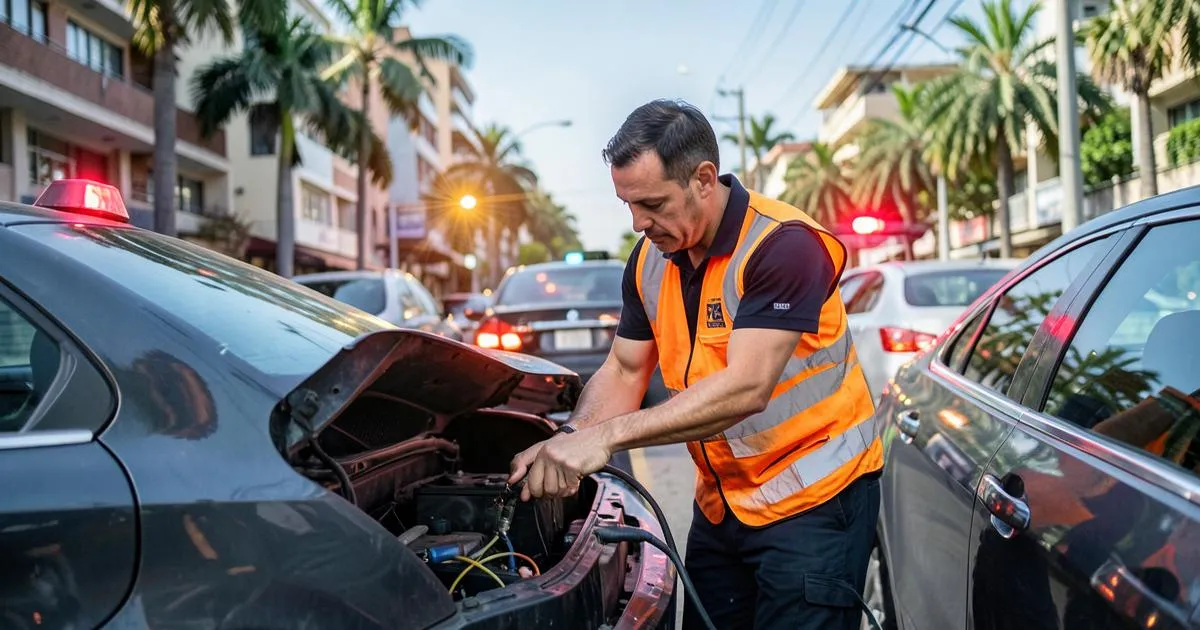
If the only symptom is a no-start, a roadside assessment may establish whether towing is needed. Our car battery and no-start checklist explains observations you can make without dismantling anything. A successful jump-start alone does not prove that the charging system or battery is healthy.
Confirm the appropriate towing method
Vehicle manufacturer guidance determines how a car may be towed. Some all-wheel-drive vehicles, automatic transmissions, hybrids and electric vehicles require particular arrangements, such as keeping all wheels off the road. Do not assume that one method suits every model. Give the operator the make, model and relevant drivetrain details, and keep the owner's manual accessible if possible.
Leave attachment, lifting and securing to the recovery professional. Do not tie an improvised rope to a bumper or ask another motorist to drag a disabled vehicle. An unsuitable attachment point or towing method can cause injury or additional damage.
Prepare the information for your request
A concise set of details reduces avoidable back-and-forth:
- Your location pin, road direction and nearest recognizable landmark.
- Vehicle make, model, drivetrain and any access restrictions.
- The fault, visible damage and whether the wheels or steering are locked.
- Your preferred workshop or destination and a reachable phone number.
If your phone battery is low, send essential details first and keep enough charge for updates. Use our Davao roadside assistance page to understand the service options to discuss.
Ask about the quote and destination before loading
Confirm what the proposed charge covers: callout, distance, loading, difficult recovery, waiting time and any storage or after-hours conditions. Do not rely on a price from an unrelated breakdown. Ask how changes to the destination or recovery complexity will be handled and request an itemized record.
Check that your destination can receive the vehicle. A workshop may be closed or have no secure drop-off space. Ask about passenger transport separately; do not assume everyone can ride in the recovery truck, and never ride inside a vehicle being towed. Remove accessible valuables and take safe photographs of the vehicle before loading.
Keep a record after the recovery
Retain the operator's details, receipt, destination and photos. At the workshop, describe the original symptom and anything that happened before the breakdown rather than asking for a repair based solely on a guess. If the vehicle was flooded, tell the technician and avoid repeated starting attempts.
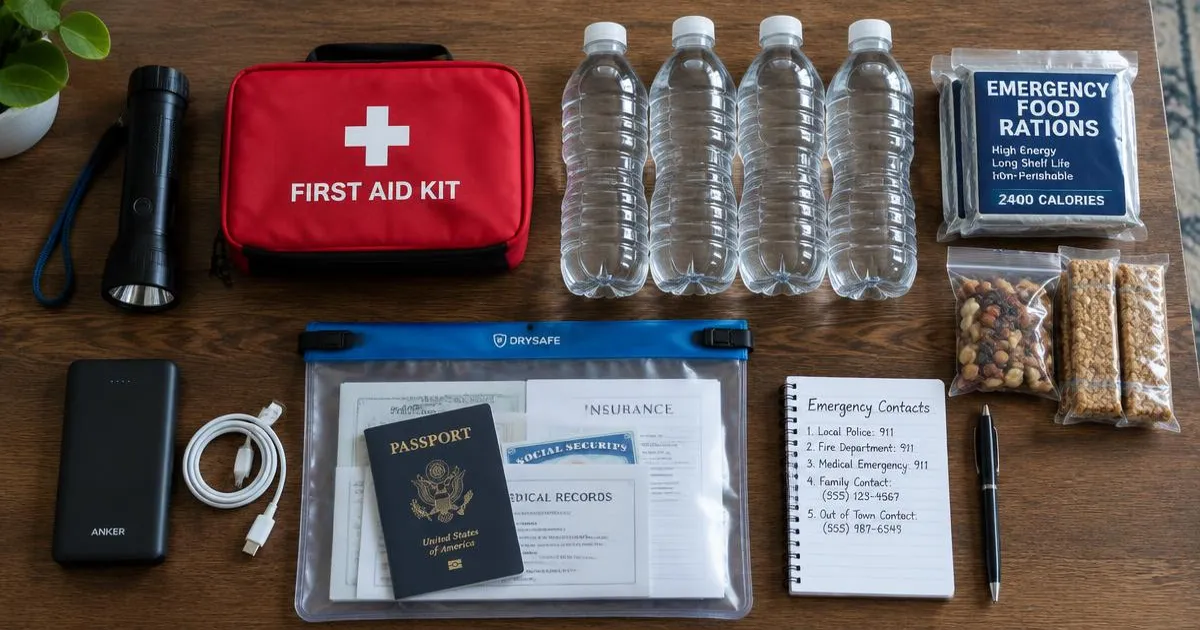
For future trips, keep the phone charged and review essential supplies in our emergency kit guide, adapting them for travel. Visit New Leaf Home Assist for the platform overview or contact our team with service questions. Safe recovery depends on the conditions and the vehicle, not simply the nearest tow truck.
Frequently asked questions
- Do I need a flatbed tow?
- Yes for all-wheel-drive, low-clearance or badly damaged vehicles.
Need help with this right now?
Describe the problem in the New Leaf app and get matched with a verified provider near you in Davao City.