Car Won't Start in Davao? A 5-Minute Battery Checklist
New Leaf Home Assist Team · New Leaf Home Assist
August 19, 2026 · 5 min read
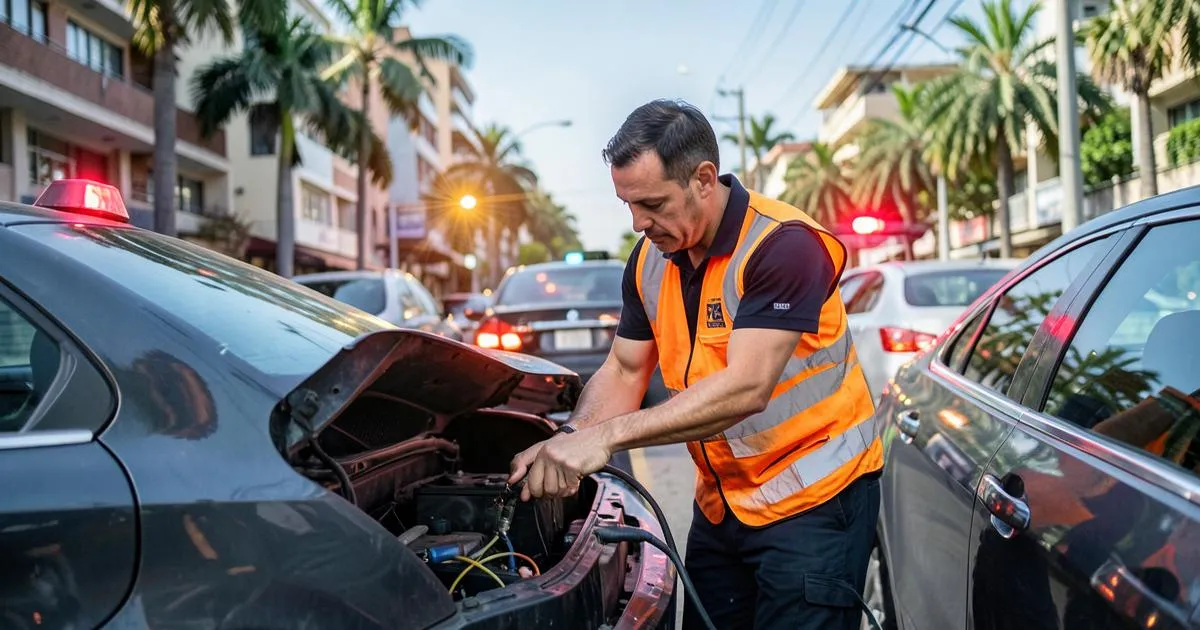
If your car will not start in Davao, a few observations can help you explain the problem before requesting roadside assistance. This five-minute battery checklist is an initial assessment, not a battery test or a promise of a roadside fix. A weak battery is only one possible cause; starter, charging, fuel, control and security-system faults can also prevent starting. Begin by deciding whether the location and vehicle are safe to approach.
Start with your surroundings, not the battery
In a driveway or parking area, keep the vehicle secured and avoid working where another car could strike you. At the roadside, use hazard lights when appropriate and assess traffic before stepping out. Do not stand in a live lane, push the vehicle into traffic or open the bonnet if it exposes you to passing vehicles.
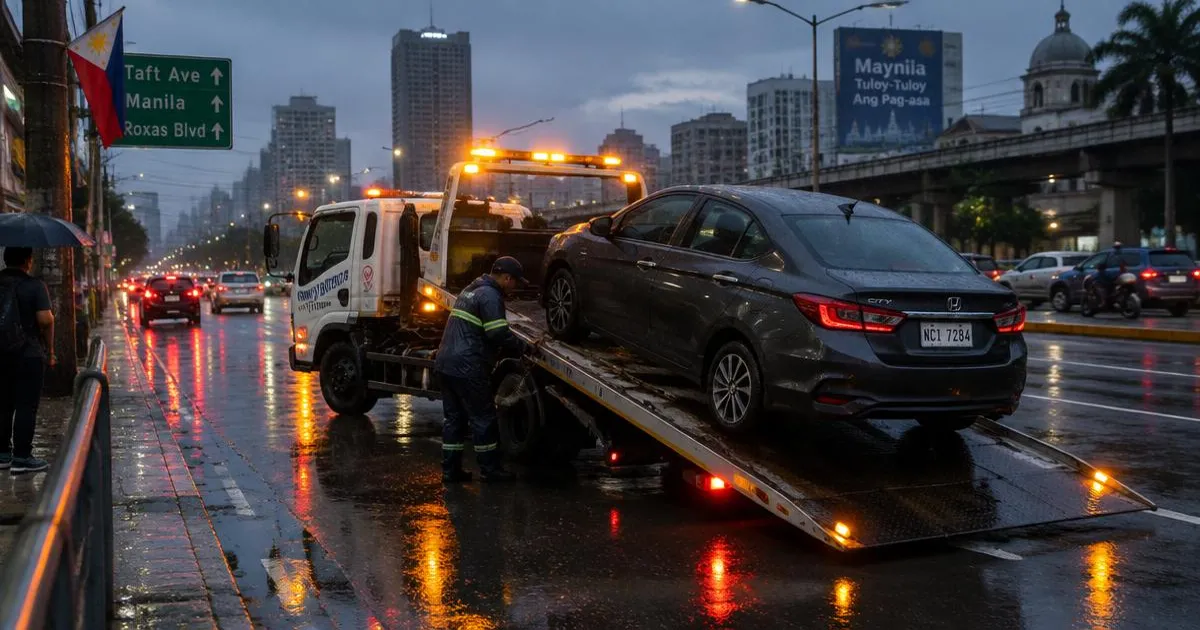
If there is smoke, a burning smell, leaking fuel or an immediate threat, move away safely and seek emergency assistance. A flooded vehicle is a separate situation: do not keep trying to start it. Our Davao roadside assistance page covers the breakdown information to provide when requesting help.
Check 1: Note what happens when you try to start
Listen to the symptom once rather than cranking repeatedly. Rapid clicking, a single click, normal cranking without the engine firing and complete silence can point to different possibilities. None proves a battery fault by itself. Record what the dashboard and lights do during the attempt.
Repeated long starting attempts can drain the battery further and may stress other components. Follow the owner's manual for starting procedures and pauses between attempts. Stop if anything smells hot, makes an unusual noise or shows another warning sign.
Check 2: Confirm the normal starting conditions
For an automatic vehicle, check that the transmission is in the appropriate starting position and the brake is pressed as the manual requires. For a manual, follow the required clutch and neutral procedure. Look for a key or immobilizer warning and consider whether a weak key-fob battery could affect recognition.
Do not bypass a starting interlock or security system. If you have a spare key and the manual permits its use, that may help distinguish a key-recognition issue from a general no-start. Tell the provider what you tried and whether the dashboard message changed.
Check 3: Observe lights and recent electrical use
Dim lights, a dashboard that fades during cranking or accessories left on overnight can be useful clues. They still do not establish the battery's health or explain why it discharged. A battery may be drained because something was left on, because it is failing, or because the charging system has another problem.
Switch off unnecessary accessories while waiting. Think about recent events: long parking periods, a previous difficult start, a recently replaced battery or a battery warning light while driving. Sharing this history helps the professional decide what to test.
Check 4: Look for damage without touching terminals
If the bonnet can be opened safely and the manual identifies the battery, inspect from a safe distance. Do not touch a swollen, cracked, leaking or unusually hot battery, and keep flames and sparks away. Wear no loose metal jewelry near battery connections. Do not loosen terminals, scrape corrosion or bridge contacts with a tool.
Some vehicles use remote connection points or place the battery in a different compartment. Hybrids and electric vehicles require particular care; do not touch high-voltage parts or cables. Looking at the battery is not a substitute for electrical testing.
Check 5: Decide whether jump-starting is appropriate
Use the owner's manual and a trained provider rather than a generic cable sequence. Connection points and permitted procedures vary, and an unsuitable method can damage electronics or cause injury. Do not attempt a jump-start on a damaged or leaking battery, and never guess at the voltage or connections.
When requesting assistance, send a compact summary:
- Location, vehicle make and model, and drivetrain type if relevant.
- Clicking, cranking, silence or warning messages.
- Recent electrical use and previous starting problems.
- Any visible damage, flood exposure or access hazards.
Ask for a diagnosis after the engine starts
A jump-start gets an engine running in some circumstances; it does not confirm that the vehicle will restart later. Ask whether battery and charging-system testing are needed. Do not assume a fixed driving time will fully recharge the battery, and do not drive an unsafe vehicle simply because it now starts.
If recovery is needed, our Davao towing preparation guide explains the next steps. Explore New Leaf Home Assist for the platform overview and contact our team with service questions. A precise symptom description is more useful than ordering a replacement battery before the fault is assessed.
Need help with this right now?
Describe the problem in the New Leaf app and get matched with a verified provider near you in Davao City.